

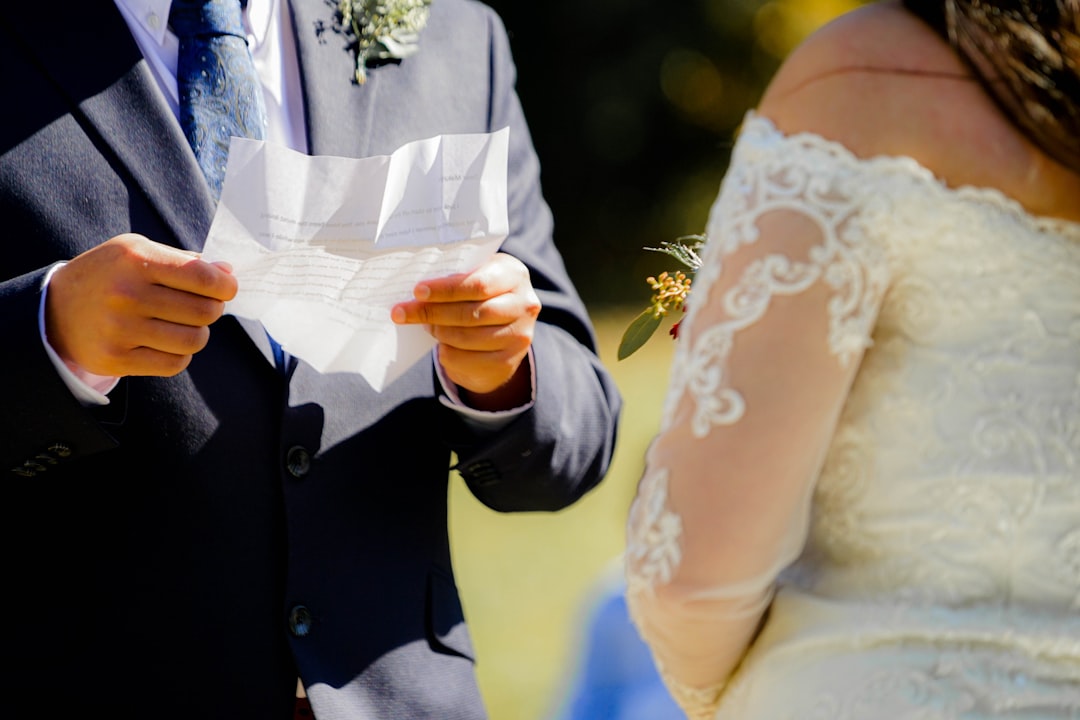
Wedding Speech Etiquette: What to Say and What to Avoid
Giving a wedding speech can feel like being handed a microphone and a small grenade at the same time. You want to say something real. You also don't want to land a joke that goes over like a wet firework in front of the groom's grandmother. Wedding speech etiquette is the set of unspoken rules that keeps your toast warm, funny, and appropriate for a room full of people who range in age from four to ninety-four.
This post walks you through the ten rules that matter most. We'll cover what to include, what to skip, timing, tone, and how to handle the awkward stuff (divorced parents, exes, inside jokes nobody else understands). By the end you'll have a checklist you can run your draft through before you hand anyone a mic.
Here's what's ahead:
- 1. Keep it under five minutes
- 2. Thank the right people in the right order
- 3. Never, ever mention exes
- 4. Skip the inside jokes nobody else gets
- 5. Avoid bachelor/bachelorette party material
- 6. Don't roast harder than the couple can take
- 7. Toast both halves of the couple
- 8. Drink less than you think is fine
- 9. Don't wing it
- 10. Raise your glass and land the ending
1. Keep it under five minutes
The single most common wedding speech etiquette rule people break is length. A speech that runs past seven minutes feels like twelve. A speech that runs past ten feels like a hostage situation. Three to five minutes is the sweet spot for most speakers, and best men or maids of honor can push to seven if the material genuinely earns it.
Practical test: read your speech out loud, at a normal pace, with a timer. Speaking pace is slower than reading pace, so a five-minute read-through will be closer to six at the actual wedding. If you're over seven minutes in your living room, start cutting.
One real example. A maid of honor named Elena once told me her draft was "only ten minutes." She read it to her sister the night before and her sister said, "Cut the middle section." Elena cut three paragraphs about their childhood bedroom and the speech instantly worked better. Shorter is almost always better.
2. Thank the right people in the right order
Parents thank hosts (traditionally the bride's parents if they paid, but in practice whoever helped). Couples thank their parents. Best men and maids of honor thank the couple and maybe the bridal party. Nobody needs to thank the catering staff by name.
Quick note: if you're a parent, you're expected to thank your spouse publicly at some point. Skipping this reads as cold, even if you didn't mean anything by it.
A workable order if you're a parent: welcome guests, thank the hosts or co-parents, say something about your child, welcome the new son or daughter-in-law into the family, toast the couple. That's the shape.
3. Never, ever mention exes
Here's the thing: someone in the room knows the story. Someone else doesn't. The second group is about to learn it from you in front of 150 people. This is the fastest way to turn a speech into a viral clip for the wrong reasons.
This applies even if the ex was the couple's mutual friend, even if the joke is "affectionate," even if you're ninety percent sure nobody will mind. The ten percent chance is the whole problem.
If you feel the urge to say "back when she was dating Tom," rewrite the sentence. You'll find there's always another way to make the same point without the name. Need help finding angles that don't require risky material? Our guide on best man speeches when you don't know the couple well has workable alternatives.
4. Skip the inside jokes nobody else gets
Your speech is not a text thread. If a joke requires three minutes of backstory, cut it. If it requires zero backstory but only four people in the room will laugh, cut it anyway. Those four people can laugh at the afterparty.
The replacement is always a universal story with a specific detail. Instead of "remember Prague?" try: "The summer we turned 22, we got lost in a city where neither of us spoke the language, and she negotiated our way back to the hotel using only hand gestures and the word taxi." Everyone understands that.
The truth is: a speech full of inside jokes isn't actually about the couple. It's about the speaker showing off how close they are. The audience can feel the difference.
5. Avoid bachelor/bachelorette party material
Nothing that happened in Vegas, Nashville, Miami, or anyone's basement belongs in a wedding speech. The rule covers strip clubs, heavy drinking, anyone getting sick, anything illegal, and anything the grandmother of either person would frown at.
This isn't about being prudish. It's about audience. Your speech is being heard by aunts, bosses, coworkers, clergy, children, and the couple's future employers scrolling the wedding video in six years. Write for that full room, not just your friend group.
Good rule of thumb: if you'd hesitate to say it to the bride's mother directly, it doesn't go in the speech. If you're thinking through awkward territory around the couple's dynamic, our post on best man speeches for second marriages has useful boundaries you can borrow.
6. Don't roast harder than the couple can take
A little light teasing is great. A little light teasing is warm. What you're avoiding is anything that sounds true in a mean way. The question to ask: would the groom's sister laugh, or would she wince?
Test it on two people who aren't your best friend. Read the joke. Watch their faces. If either of them does the micro-wince, cut the joke or soften it. The micro-wince never lies.
Here's a real example of a joke that works: "When Jason told me he'd met 'the one,' I said, 'Again?' And he said, 'No. This time I mean it.' And watching them together tonight, I can see why." Teasing plus tribute. The roast lands because the landing is warm.
7. Toast both halves of the couple
If you're the best man, your friend is the groom, but the speech is ultimately about the marriage. That means you need a genuine, specific compliment for the bride (or the other groom) by the end. Same rule for maids of honor. Same rule for parents when talking about the new son or daughter-in-law.
The mistake people make: spending 90% of the speech on their one friend and then saying "...and of course, Sarah is great." That's worse than saying nothing. Spend real time on the partner. Ask the couple's close friends what they love about the partner. Write it down.
But wait — this doesn't mean equal time for both. It means equal warmth. One minute of specific praise for the partner beats three minutes of generic praise.
8. Drink less than you think is fine
The wedding starts earlier than you think. By the time speeches happen, you may have been drinking for three hours on a stomach of canapés. "Fine" at 6 p.m. is not the same as fine at 9 p.m.
One drink to settle nerves is reasonable. Two is the ceiling before your speech. After your speech, go for it. Before, stay on the clear side of tipsy.
The cost of a drunk speech is measured in the wedding video. You don't get to re-record it. For more on staying steady when nerves are high, see our guide on best man speeches when you're nervous.
9. Don't wing it
"I'll just speak from the heart" is the number one cause of bad wedding speeches. What comes out of your mouth when you're nervous and holding a microphone bears no resemblance to what you'd planned to say. You will repeat yourself. You will trail off. You will suddenly remember something irrelevant.
Write it out fully, then reduce it to bullets on index cards. The full draft is for memorization and flow. The bullets are what you actually hold at the mic. This combination is how professional speakers work, and it works for wedding toasts too.
Practice out loud five times. Not in your head — out loud, standing up, with your cards. If you're an introvert dreading this, we have specific tactics in best man speeches for introverts.
10. Raise your glass and land the ending
Here's a clean close that works every time: one sentence about the couple, then "please raise your glass," then a toast phrase, then sit down. Don't explain what you just said. Don't add a coda. Don't say "and one more thing."
A workable template: "To Ben and Maya — may your life together be full of the kindness I've seen you show each other tonight. Please, raise your glass. To Ben and Maya." Sit.
The sitting is important. It signals "speech over, resume dinner" and the room exhales. An over-long ending is the easiest wedding speech etiquette error to fix.
FAQ
Q: How long should a wedding speech be?
Three to five minutes for most speakers. Best men and maids of honor can stretch to seven if the material earns it. Parents usually land around four. Anything past eight minutes and the room starts checking their phones.
Q: Is it okay to mention ex-partners in a wedding speech?
No. Not even as a joke. Not even if everyone "knows the story." The wedding day is about the couple in front of you, and bringing up an ex turns a toast into gossip instantly.
Q: Should I read from a script or memorize my speech?
Use notes. Index cards with bullet points give you a safety net without making you sound like you're reading a book report. Full memorization is risky if nerves hit, and a phone script looks less formal than a small notecard.
Q: Is it rude not to give a speech if you're in the wedding party?
Not at all. If you're not comfortable speaking, ask the couple well in advance if you can skip it. Most couples would rather have a quiet bridesmaid than a miserable one forced to toast.
Q: Can I drink before my wedding speech?
One drink to take the edge off is fine. Two is the ceiling. Anything past that and you're rolling dice with the most-recorded five minutes of your year.
Need help writing your speech? ToastWiz uses AI to write a personalized wedding speech based on your real stories and relationship. Answer a few questions and get 4 unique speech drafts in minutes.