

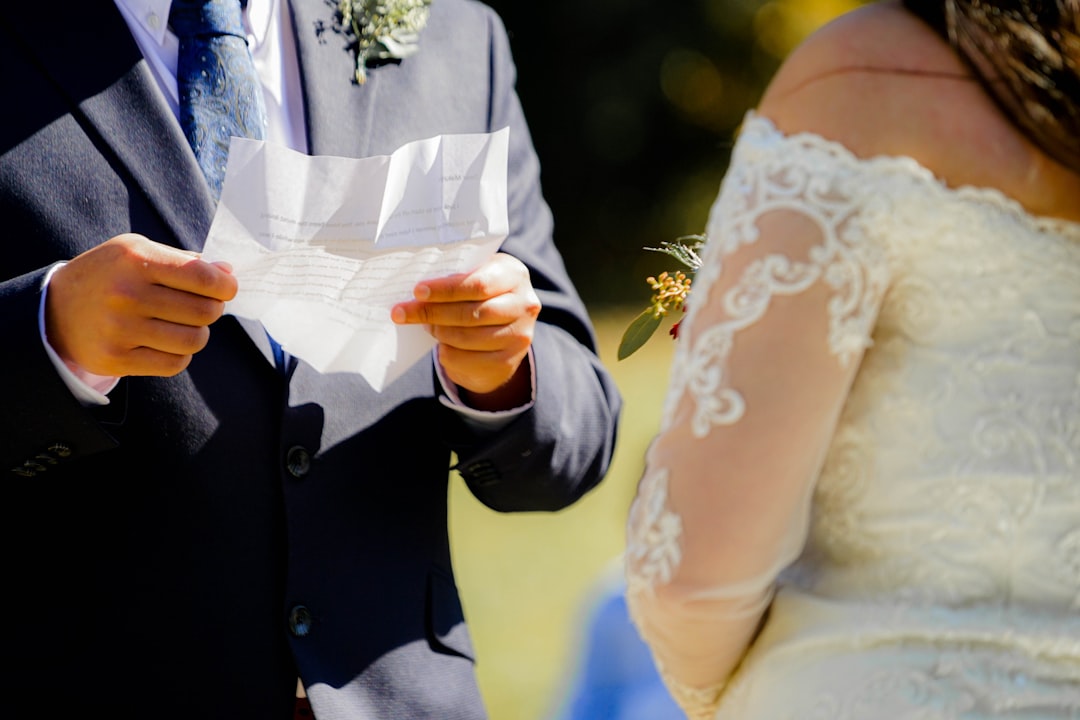
Wedding Speech Delivery: How to Sound Natural
You've written the speech. Maybe you've rewritten it four times. And now the real fear sets in: standing up in front of 150 people, hearing your voice through a microphone for the first time, and wondering if any of this will actually land.
Here's what most people get wrong. They spend 90% of their prep time on the words and 10% on the delivery. Then they wonder why their speech feels stiff. These wedding speech delivery tips flip that ratio. A good speech delivered badly is forgettable. A decent speech delivered well gets quoted at the after-party.
Below you'll find 12 specific delivery tactics that make you sound like a person talking to friends, not a Zoom presenter reading bullet points. No vague advice. Just what to practice, what to cut, and what to do when your hands start shaking.
Table of Contents
- Why Wedding Speech Delivery Matters More Than the Words
- Tip 1: Mark Up Your Script for Breath
- Tip 2: Practice Out Loud, Standing Up
- Tip 3: Slow Down to About 130 Words Per Minute
- Tip 4: Use the Two-Second Pause
- Tip 5: Pick Three Faces in the Room
- Tip 6: Own the Microphone
- Tip 7: Plan the Emotional Moments
- Tip 8: Manage Your Hands
- Tip 9: Record Yourself on Your Phone
- Tip 10: Have a Water Strategy
- Tip 11: Know Your Recovery Move
- Tip 12: End on the Toast, Not the Apology
- FAQ
Why Wedding Speech Delivery Matters More Than the Words
A wedding crowd forgives imperfect jokes. What they don't forgive is energy that feels off — either a monotone read from a phone or a frantic rush that ends before anyone has tuned in.
Good delivery buys you room to be imperfect. If you sound warm and present, people laugh at mediocre jokes and tear up at simple lines. Nail this layer and the writing does less work.
Tip 1: Mark Up Your Script for Breath
Print your speech in 14-point font, double-spaced, with wide margins. Now mark it up like a musician marks a score. A single slash (/) for a short pause. A double slash (//) for a long pause. Underline words you want to emphasize.
Take Priya, the maid of honor who told me her speech felt "flat" in rehearsal. She'd written a great line about the bride crying over a burnt lasagna on their 23rd birthday. Flat delivery because she rushed through it. Once she put "//" before "burnt lasagna" and underlined "twenty-third," the line landed every time.
The marks aren't artistic. They're functional. They tell future-you, in the moment, where to slow down.
Tip 2: Practice Out Loud, Standing Up
Reading your speech silently on the couch doesn't count. Your brain fills in rhythms that your mouth can't actually produce.
Stand up. Pretend you're at the venue. Read it aloud from start to finish without stopping. Yes, even the awkward parts. Do this at least five times in the week before the wedding. The tenth time is where the speech stops being a document and becomes something you've said.
Tip 3: Slow Down to About 130 Words Per Minute
Nerves push you toward 180 words per minute. That's fine for a podcast argument. It's terrible for a wedding toast.
Here's the thing: slower feels weird to you but lands perfectly for the audience. They need a beat to catch each image. A 650-word speech should run about five minutes. If your timed practice clocks in at 3:30, you're rushing.
Tip 4: Use the Two-Second Pause
After a punchline or an emotional line, silence is your friend. Count to two in your head before moving on. Pros call this "hang time." It tells the room: that was the point, react now.
Most people rush past their best lines because silence feels awkward. The audience needs the beat more than you do. Give it to them.
Tip 5: Pick Three Faces in the Room
Don't try to make eye contact with everyone. You'll end up looking at no one. Instead, pick three people in advance: someone at the back, someone on the left, someone on the right. Rotate between them every few sentences.
For jokes, look at a friend who reliably laughs. For emotional lines, look at the couple. This simple rotation makes the whole room feel seen without actually needing a direct line to each of them.
Tip 6: Own the Microphone
The mic is not a mystery. Hold it about four fingers below your chin, angled up toward your mouth. Don't hover it six inches away and don't eat it. If it's on a stand, adjust the stand before you start. Fiddling with it mid-speech reads as panic.
Quick note: if the venue has a lavalier or headset mic, ask the DJ for a 30-second sound check before the dinner. You'll thank yourself.
Tip 7: Plan the Emotional Moments
You know which line is going to choke you up. Probably the one about your sister's childhood, or the moment your best friend met their partner. Don't pretend it won't hit.
Write a small "breathe" cue next to that line in your notes. When you hit it, stop. Take a breath. Look at the couple. Keep going. The pause gives the audience permission to feel it too. This is where speakers like an introverted best man often actually shine — they've already prepared for the feelings.
Tip 8: Manage Your Hands
Nervous hands find the mic cord, the podium edge, and your wine glass. All three are bad. If the mic is handheld, your non-mic hand stays loose at your side or gestures naturally. If the mic is on a stand, both hands can rest on cards or the podium.
Don't hold your phone as a script unless you absolutely must. The glow on your face looks weird in photos and your thumb will scroll accidentally. Paper or index cards every time.
Tip 9: Record Yourself on Your Phone
This one hurts, but do it. Prop your phone up, record a full run-through, and watch it back once. You'll immediately hear the filler words ("um," "so," "like") and see the places where you stare at the paper too long.
You don't need to love what you see. You just need to catch the two or three habits worth fixing. Watching yourself is also the fastest cure for the "what will I look like?" anxiety — because now you know.
Tip 10: Have a Water Strategy
Dry mouth is real and it gets worse under a microphone. Keep a glass of water on the table behind you and take a sip before you stand up. Place another glass near the podium. If you hit a moment where your mouth feels like sandpaper, pause, take a small sip, and continue. The pause reads as thoughtful, not nervous.
Avoid ice-cold water, which tightens the throat, and anything carbonated, which traps burps mid-sentence. Room temperature, plain. That's the rule.
Tip 11: Know Your Recovery Move
Something will go wrong. You'll skip a line, the crowd won't laugh at a joke, or someone will drop a tray of glasses. Plan one recovery phrase you can throw out automatically.
Good options: "Anyway, where was I?" / "Let me try that again." / "Weddings, am I right?" If you know you have a landing pad, the fear of a mistake stops controlling the delivery. Works well for someone giving a speech about a person they don't know well, too — confidence covers a lot.
Tip 12: End on the Toast, Not the Apology
The worst wedding speech endings sound like this: "Well, I think that's all I wanted to say, so, um, cheers I guess." Don't do that.
Memorize your final three sentences so you can deliver them looking directly at the couple, glass raised. "To Marcus and Jen — the best thing that ever happened to either of you. We love you. Cheers." Then sit down. Confident endings get applause. Apologetic endings get polite claps.
If nerves are your biggest obstacle, take a look at the tactics in the guide for giving a speech when you're nervous — a lot of them apply here too, especially the breathing routine.
FAQ
Q: Should I memorize my wedding speech?
No. Full memorization almost always sounds robotic and risks a total blank. Memorize your opening line and closing toast, and use bullet-point notes for everything in between.
Q: How do I stop my voice from shaking?
Shaky voice comes from shallow breathing. Before you start, take two slow breaths in through your nose and out through your mouth. Then deliver your first sentence slower than feels normal.
Q: Is it okay to read my wedding speech word for word?
It's okay, but you'll connect better if you look up every sentence or two. Print in a large font, highlight key phrases, and practice until the paper feels like a safety net, not a script.
Q: How fast should I speak during a wedding speech?
Slower than conversation. Aim for about 130 words per minute. If a five-minute speech is around 650 words, you're in the right zone. Nerves will speed you up, so plan to feel slow.
Q: What do I do if I lose my place mid-speech?
Pause, smile, look at the couple, and find your spot. The pause feels long to you but natural to the room. Nobody will notice unless you panic and announce it.
Need help writing your speech? ToastWiz uses AI to write a personalized wedding speech based on your real stories and relationship. Answer a few questions and get 4 unique speech drafts in minutes.