

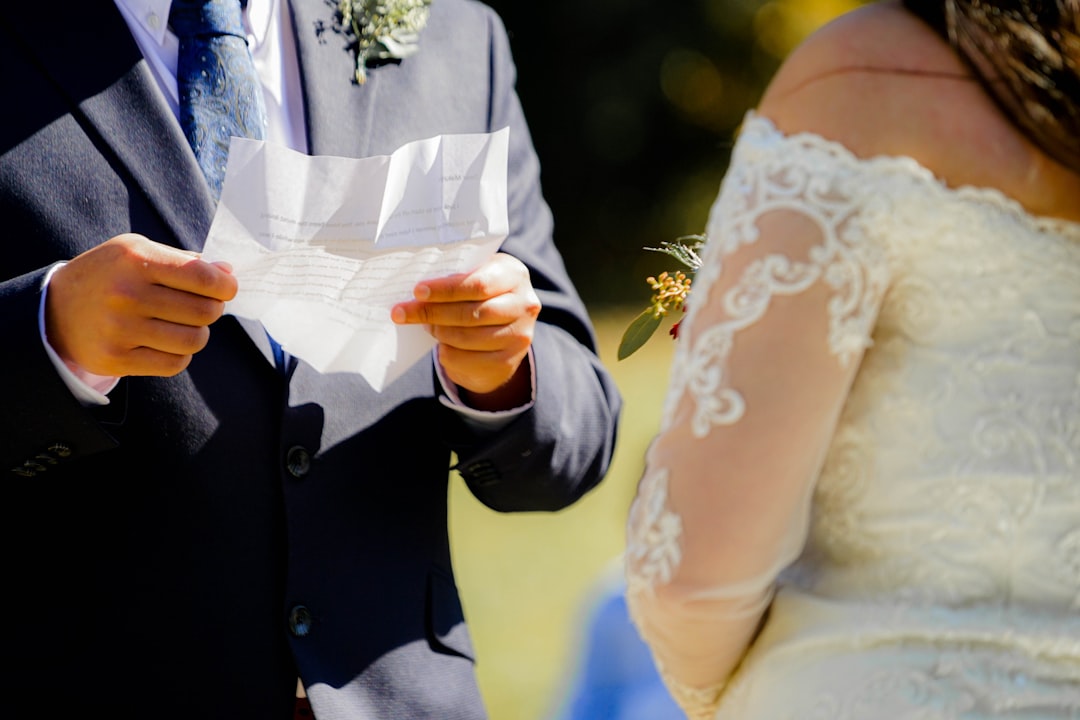
Unique Best Man Speech Ideas
Here's the problem with most best man speeches: they all sound the same. Opening joke about being nervous. A quick childhood story. A mild roast. The sentimental pivot. A raised glass. Six minutes, seven minutes, done. The bride's mother smiles politely. Nobody remembers it on Monday.
A unique best man speech isn't about being weird for its own sake. It's about picking one structural or content choice the room isn't expecting, committing to it fully, and delivering it with the same warmth and landing as a traditional toast. Below are 12 ideas — formats, angles, and specific openers — that give your speech a shape nobody else at the wedding will have.
For the underlying bones of any best man speech, best man speech complete guide is the foundation. This post is about what you do with those bones.
12 Unique Best Man Speech Ideas
1. The "Job Application" Speech
Frame the speech as a job description the groom once applied for: husband of the bride. Walk through the qualifications he didn't meet at 19, the ones he earned over time, and the ones the bride brought out of him. "At 22, Jake was not qualified for this position. He could not make a bed. He could not load a dishwasher. He thought 'deductible' was a type of sandwich."
Land it with: "As of today, I'm pleased to say the hiring committee has made a final decision. Welcome aboard, Jake." Funny, structured, warm, different.
2. The Single-Prop Speech
Bring one specific object that matters to the groom's story and build the whole speech around it. A cracked phone from their college road trip. The coaster from the bar where they met the bride. An old backpack.
Hold it up once, tell the story behind it, return to it at the end. Consider how Marcus, a best man at a wedding in Denver, used a single faded concert ticket from a 2011 show to anchor a seven-minute speech. Everyone in the room remembered that ticket a year later. The prop gave him something the rest of the speeches didn't have.
3. The "Three Words" Speech
Pick three single words that describe the groom, announce them at the top, and give each one a 90-second story. "Tonight I'm going to describe Kevin in three words. The first is 'stubborn.' The second is 'generous.' The third, and I did not want to have to say this, is 'handsome.'"
Structure does half the work for you. The room knows the shape, so they lean in. Each word gets its story, the words recur in the close, and you have a clean, memorable frame.
4. The "Advice From Our Younger Selves" Speech
Imagine what the 14-year-old version of you and the 14-year-old version of the groom would say to the two of you today. "If I could show 14-year-old Sam what 34-year-old Sam looks like right now — wearing a real suit, marrying a real human woman, holding a real champagne flute — he would tell me I was lying to him."
Then flip it. What would 14-year-old you tell the groom? What would he tell himself? The perspective jump is unexpected and gives you permission to be sentimental without being saccharine.
5. The "Instruction Manual" Speech
Deliver the speech as a mock user guide for the bride, introducing her to the groom's features and quirks. "Section 3.4: Food preferences. The unit is compatible with all major cuisines except cilantro, which triggers error code 500. Do not attempt to feed the unit cilantro. We have tried."
This one works best if the groom is a good sport and the humor is affectionate. Five sections, each one short, each one specific. Close with a warm line breaking the frame: "Final warranty information: the unit is covered for life, provided you return the love daily."
6. The "Written by a Friend Who Can't Be Here" Speech
If someone important is missing — a friend who couldn't travel, a grandparent who passed — you can frame part of your speech as what they would have said. Use it sparingly and get permission from the family first.
"Our friend Kevin couldn't be here tonight. He texted me last night and asked if I'd work his toast into mine. So here's what Kevin wanted to say: he wanted to tell Jake that he's seen him change in the last three years, and that Laura is the reason, and that he wanted Laura to know how grateful he is that she chose him."
The frame makes the warmth hit harder. It's unique because almost nobody does it.
7. The "Two-Person" Best Man Speech
If there are co-best men, actually use the fact. Script it as a dialogue where you finish each other's sentences, deliberately contradict each other, or trade beats. Most co-best men just take turns giving half-speeches. A scripted two-hander is a different beast.
"I'll tell the good parts. He'll tell the embarrassing parts. That's how we divided it." Then you actually deliver it that way. Rehearse twice. Much harder than a solo speech, but way more memorable.
8. The "Timeline Through One Object" Speech
Pick a single object that has shown up repeatedly across the groom's adult life — a specific car, a sports jersey, a hat — and use it to trace his trajectory. "Mark has owned one baseball cap since 2008. It was green once. It is now, charitably, beige. I have watched this hat survive four apartments, two dogs, and one cross-country move. Tonight, Laura is going to have to decide whether the hat survives the wedding."
It sounds like a joke structure and then pivots. The hat becomes a stand-in for who he was before, and you land on who he's becoming with her.
9. The "Q&A With the Bride" Speech
Text the bride a list of short questions a week before the wedding and use her answers as the spine of your speech. "I asked Natalie four questions this week. Her answers tell you more about Jake than I can."
"Question one: What does Jake cry at? Her answer, verbatim: the end of Coco. Only the end of Coco. No other Pixar movie. Just Coco." Specific, weird, warm. You're using the bride's voice to reveal the groom, which is unexpected and generous to both of them.
10. The "One-Scene Movie" Speech
Pick one moment, one specific afternoon or evening, and describe it in vivid detail as if it were a scene in a film. Don't tell the room what it means. Just paint it.
"It's August 2021. Tom and I are in his parents' backyard in Buffalo. He has just met Priya two weeks earlier. He is standing at the grill overcooking a burger he has been nervous about for 40 minutes. His phone buzzes. He looks at it. His whole face changes. I look over his shoulder and I see it's a text from Priya. One line. 'Thinking about you.' Tom doesn't say anything. He just turns the burger. I have never seen him smile like that before. That's the moment I knew."
Show, don't tell. The room will do the emotional math themselves. That's the whole move.
11. The "Thank-You Letter to the Bride" Speech
Flip the traditional format. Instead of talking about the groom, address the bride for most of the speech. Thank her, specifically and at length, for what she's done for him. "Claire, I want to thank you for exactly five things you've done for my best friend." Then list them.
This is unique because it inverts the expected subject. The groom usually gets roasted and the bride gets a polite compliment. Flipping that ratio is a structural surprise that also makes the bride feel genuinely seen. For more grounded examples of sentimental angles, heartfelt-best-man-speech has useful material.
12. The "Evidence-Based" Speech
Open with a claim and then provide exhibits. "My thesis tonight is that Mike was not ready to be anyone's husband until he met Dana. I have three pieces of evidence. Exhibit A: in 2017, Mike owned three forks. Exhibit B: in 2018, Mike tried to drive from Boston to Montreal without a passport. Exhibit C: in 2019, Mike let a plant die that he had named 'Plant.'"
Then provide the counter-evidence. "By 2022, Mike had eight forks, a passport, and a small successful garden. The variable that changed was Dana." Structured, funny, specific, and it lands on a sincere point.
How to Pick the Right One for You
Here's the thing: not every format fits every groom. If the groom is reserved, the instruction-manual speech will feel mean. If the groom is a showman, the single-prop speech might feel too quiet. Match the format to your audience.
Run a quick test: pick your top three from the list above, try writing the first 60 seconds of each, and read them out loud. The one that flows most naturally is your format. The other two stay in the draft folder.
For delivery tactics that pair with any unique format, best man speech tips covers the basics. If nerves are the bigger obstacle than format, best man speech nervous is the priority read.
A Full Sample: The "Three Words" Speech
Here's a quick example of Format #3 in action, for a groom named Ben.
"Hi everyone. I'm Alex, Ben's best man. Tonight I'm going to describe Ben in three words. The first is 'early.' Ben is always 20 minutes early to everything, including his own life. He met Hannah three years ago at a coffee shop where he arrived 25 minutes before their date started and read the menu four times. Hannah was impressed. I was not surprised.
"The second word is 'loyal.' In high school, Ben ate the same cafeteria sandwich every day for four years. He ate it even after they changed the bread. He ate it even after the cafeteria stopped labeling it on the menu. That kind of loyalty is why, when Hannah walked into his life, he didn't look at anybody else again.
"The third word is 'lucky.' Ben, you are marrying the single best human in any room she enters. You know it. Hannah, I hope you also know Ben is going to show up 20 minutes early to every important thing in your life, and that's a quality you want in a husband.
"Everyone, please raise a glass. To Ben — early, loyal, lucky. And to Hannah, for making the last one true."
Three minutes. Structured. Specific. Different from every other best man speech that night. That's the whole play.
For more specific content variations by event type, best man speech destination wedding and best man speech outdoor wedding add context-specific angles you can layer onto any of the 12 formats above.
FAQ
Q: What makes a best man speech actually unique?
Structure, not just content. Most best man speeches follow the same template — joke, roast, sentimental turn, toast. A unique speech either changes the structure, uses a specific conceit all the way through, or delivers in a format the room isn't expecting.
Q: Is it risky to try something unusual?
It's risky only if you don't commit. A weird format that's half-executed bombs; a weird format that's delivered with confidence kills. The rule is: pick one unusual move and do it all the way.
Q: Should I avoid the classic roast format?
Not necessarily — but if you use it, you have to roast harder and pivot warmer than everyone else. If you can't, use a different format. A mediocre roast is the worst kind of best man speech.
Q: Can I use props or visuals?
Small, rehearsed props work. A single index card, a photo passed around, a specific object from a shared memory. Anything bigger (costumes, slideshows) is risky at most weddings. Know your room.
Q: How long can a unique best man speech be?
Same as a regular one — five to seven minutes max. A creative format doesn't earn you more time; it earns you more attention within the normal window.
Need help writing your speech? ToastWiz uses AI to write a personalized wedding speech based on your real stories and relationship. Answer a few questions and get 4 unique speech drafts in minutes.