

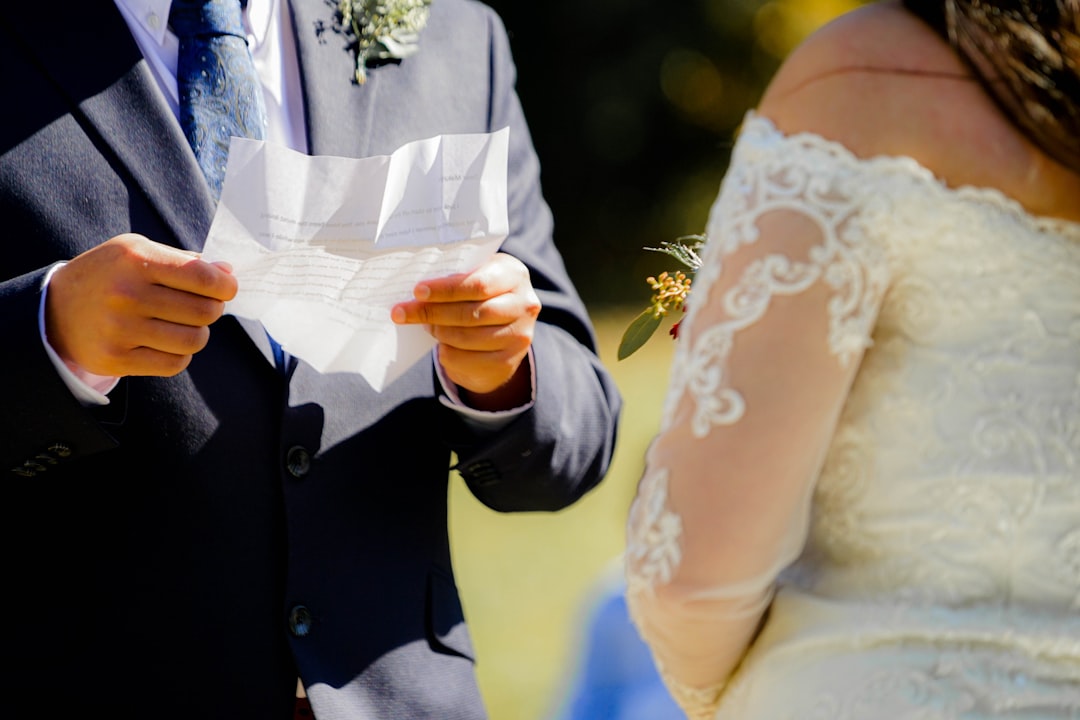
Surprise Wedding Speech: How to Pull It Off
You want to give a surprise wedding speech. Maybe you weren't on the original speech list. Maybe the couple's grandmother couldn't travel, and you want to speak for her. Maybe you just have something to say that the moment calls for. Whatever the reason, the move is possible — but it's also delicate, and the difference between a beautiful surprise and an awkward intrusion is almost entirely in the prep.
This post walks you through exactly how to plan, coordinate, and deliver a surprise wedding speech that lands. You'll learn what to clear in advance, when to grab the mic, how to structure the toast itself, and how to recover if you freeze.
Table of Contents
- What "Surprise" Actually Means Here
- Tip 1: Decide Who You're Surprising
- Tip 2: Clear It With the Coordinator
- Tip 3: Time It Right
- Tip 4: Keep It Short (Really Short)
- Tip 5: Structure the Speech Around One Memory
- Tip 6: Open Clean, Close Clean
- Tip 7: Have a Backup Plan for Nerves
- A Sample Surprise Toast
- FAQ
What "Surprise" Actually Means Here
A surprise wedding speech usually means one of two things: the couple didn't know you were speaking, or the whole room didn't know you were speaking. Those are different problems.
If the couple didn't know, you have to be sure they'll welcome the surprise. Some couples love a spontaneous toast from a grandparent or a sibling who wasn't on the schedule. Other couples spent six months planning the reception order and would be annoyed if you hijacked it. Know your people.
If the couple knows but the room doesn't, it's easier. You're just delivering a planned toast that lands as a pleasant moment rather than an expected one.
Either way, you still need to coordinate. More on that in a second.
Tip 1: Decide Who You're Surprising
Before anything else, answer one question: who is the surprise for?
- The couple (they had no idea you were going to speak)
- One specific person (you're speaking on behalf of someone who can't be there)
- The whole room (nobody expected a toast at this moment)
Each version has different stakes. The couple-is-surprised version is highest risk and highest reward. The on-behalf version is usually welcome because it fills a gap people feel. The room-is-surprised version is low-stakes — it just requires coordination with the person running the schedule.
Write down which version you're doing. This one sentence shapes the whole plan.
Tip 2: Clear It With the Coordinator
Here's the thing: wedding receptions run on a timeline. The DJ knows when the toasts are. The caterer knows when dinner ends. The coordinator has built a flow that includes music cues, lighting, and a first dance window.
If you grab the mic without warning, you will step on at least one of those cues, and the coordinator will never forgive you. Worse, the couple might feel it as chaos instead of generosity.
The fix: text or email the wedding coordinator or the MC a week before. "Hi, I'd love to give a short surprise toast at the reception — maybe 90 seconds, after the planned speeches. Is there a good moment where that would work?" Nine times out of ten, they'll say yes and slot you in. You get the surprise; they keep their timeline.
Tip 3: Time It Right
Good windows for a surprise toast, in order of preference:
- Right after the planned speeches. The mic is out, the room is paying attention, you extend the toast run by two minutes. Clean.
- During dessert. Low-stakes, people are relaxed, and a toast feels like a gift.
- After the cake cutting. Similar energy to dessert. Good if there's natural pause.
Bad windows:
- During dinner service. Waiters are moving, people are eating, you'll be competing with forks.
- Right before the first dance. The DJ has a cue set. Don't disrupt it.
- During cocktail hour. People are scattered; you won't have the room's attention.
Your coordinator will help you pick. Defer to them.
Tip 4: Keep It Short (Really Short)
A surprise speech is a gift, and gifts that are short land better than gifts that are long. Aim for 90 seconds to two minutes. That's about 200 to 280 spoken words.
A surprise toast that goes four minutes stops being a surprise and becomes a problem. You lose the room, and worse, you disrupt the couple's own mental timing of the night. If you feel you need more than two minutes to say what you want, you're not giving a surprise toast — you're giving an unplanned speech, and those are different.
Consider how Marcus, a groom's mentor at a wedding in Chicago, pulled off a perfect 75-second surprise toast: one thanks, one specific story, one raised glass. He didn't try to be comprehensive. He trusted that one great beat was better than three okay ones.
Tip 5: Structure the Speech Around One Memory
Don't try to cover the couple's whole history. Pick one memory that crystallizes something about them — their kindness, their humor, their resilience — and tell that story.
A useful structure:
- Sentence 1: Who you are and why you're speaking. ("I'm Maria. I was Sofia's tenth-grade English teacher, and I wasn't on the schedule tonight, but I had something to say.")
- Sentences 2-6: One story, specific, with dialogue or a sensory detail.
- Sentences 7-8: What that story tells us about the couple today.
- Sentence 9: "Please raise your glasses."
- Sentence 10: The toast itself.
Ten sentences. Two minutes. Done.
Tip 6: Open Clean, Close Clean
The truth is: surprise toasts live or die on the first sentence. Because nobody is expecting you, you have about three seconds to earn the room's attention.
Good opens:
- "I wasn't on tonight's schedule, but I asked for 90 seconds because I had something to say about the bride."
- "Hi. For those who don't know me, I'm [name], and I taught the groom in seventh grade — which he'll probably tell me to stop mentioning."
- "I promise this will be short. I just couldn't let the night end without saying one thing about these two."
Bad opens:
- Any apology. "Sorry to interrupt…" No apologizing for the gift.
- A long explanation of why you're speaking. Get to the point.
- A throat-clear like "I've prepared a few remarks." Too formal.
Close clean too. One clear toast line, glass up, eye contact with the couple, done.
Tip 7: Have a Backup Plan for Nerves
Surprise toasts are often harder than planned ones because you haven't practiced out loud in the same way. Have a small index card with three bullets: your one memory, the sentence linking it to who they are now, and the final toast line.
If you freeze, read from the card. Nobody will judge you. They'll judge you far more for a long, rambling unprepared speech than for a short, read one.
For related nerve-management techniques, best man speech nervous has tactics that translate directly.
A Sample Surprise Toast
Here's a full sample from a family friend who gave an unplanned toast on behalf of the bride's late father.
"Hi everyone. I'm Jim. I was Rachel's dad's best friend for 35 years, and I wasn't on the schedule tonight, but I asked Rachel's mom if I could say one thing, and she said yes.
"Rachel's dad and I once drove nine hours from Pittsburgh to Savannah because he wanted to surprise her with a visit at college. We got there, she was at a library. We waited in a coffee shop for four hours. He didn't care. He just wanted her to know he'd show up.
"Rachel, he is showing up tonight. He is in this room. Don't doubt that for a second.
"Alex, you're marrying the daughter of the best man I ever knew. She is made of him.
"Everyone, please raise a glass. To Rachel, to Alex, and to the people we carry with us."
Ninety seconds. Specific, warm, complete. Works because it's short and it's true.
For more context on speeches where you're stepping into a role you don't formally hold, best man speech dont know well has useful framing. For the structural bones of any toast, best man speech outline applies even when you're not the best man.
FAQ
Q: Is it rude to give a surprise wedding speech?
It can be if you don't clear it with anyone. A true surprise to the couple is fine; a surprise to the wedding planner and officiant is a problem. Tell the coordinator so they can work you into the schedule.
Q: How long should a surprise wedding speech be?
Two minutes or less. A surprise toast is a gift, and short gifts land better than long ones. Under 300 spoken words is the target.
Q: When's the right time to grab the mic?
After the planned speeches are done, before the first dance, or during dessert. Never during dinner service or before the official toasts — you'll disrupt the flow.
Q: Should I tell the couple I'm planning a surprise speech?
Tell at least one of them if there's any chance they'd be upset. Some couples hate surprises on their wedding day. Better to check than to regret it.
Q: What if I freeze up when I get the mic?
Keep a written card with three bullet points: one memory, one compliment to the couple, one toast line. Even if everything else falls apart, those three beats carry you through.
Need help writing your speech? ToastWiz uses AI to write a personalized wedding speech based on your real stories and relationship. Answer a few questions and get 4 unique speech drafts in minutes.