

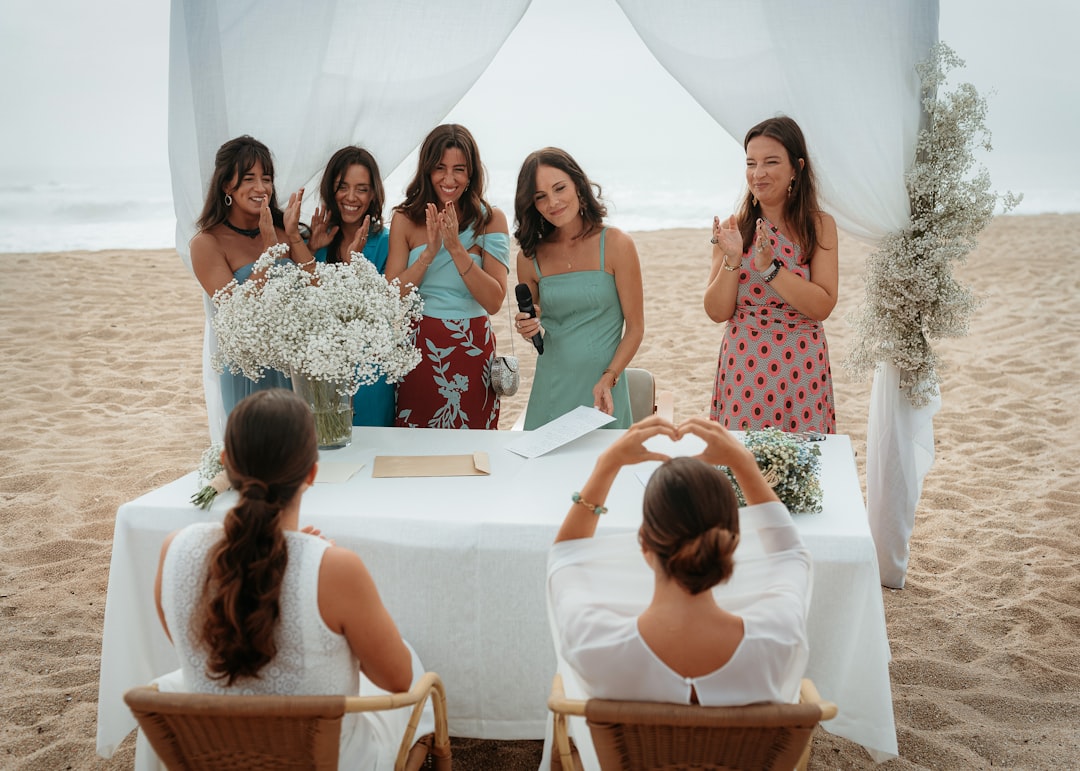
Maid of Honor Speech vs Matron of Honor Speech
If you're searching for the difference between a maid of honor vs matron of honor speech, the answer is going to surprise you: there basically isn't one. The role is the same. The duties are the same. The speech is the same. The title changes only because one is married and one isn't, which is a distinction English decided to make sometime in the 17th century and has stubbornly kept ever since.
But there are a few small things worth knowing. If the bride has both, there are real choices to make about who speaks and how. The emotional territory available to a matron of honor is sometimes slightly different (she can reference her own marriage, which a maid of honor can't). And the audience occasionally reads one as "older" and the other as "younger," which can subtly shift what lands.
This post covers the actual differences (small), the perceived differences (sometimes matter), and how to handle the case where both give speeches.
Table of Contents
- The real definition of each role
- What changes in a matron of honor speech (and what doesn't)
- Tips for a matron of honor speech
- Tips when both maid and matron are speaking
- FAQ
The real definition of each role
1. Married vs unmarried, that's the whole distinction
The matron of honor is married. The maid of honor is not. There is no other structural difference. Historically the term "matron" also skewed older and often referred to a bride's married sister, while "maid" implied a young unmarried friend. These days plenty of brides pick a matron of honor in her 20s and a maid of honor in her 50s. The titles lag the reality.
Both walk down the aisle, hold the bouquet, sign the marriage license as a witness where allowed, and give the speech. Same job.
2. The speech target is identical
A maid of honor speech vs matron of honor speech runs the same length (three to five minutes), carries the same weight (she's the keynote speaker on the bride's side), and should hit the same beats: one anchor story, a pivot to the groom, a clean toast. The structural rules in any maid of honor speech template apply equally to both.
If you were expecting a different playbook for matron of honor, there isn't one. Breathe. Your speech is the same.
What changes in a matron of honor speech (and what doesn't)
3. You can reference your own marriage, carefully
A matron of honor has something a maid of honor doesn't: first-hand marriage experience. Used sparingly, this is gold. One sentence like "When I married my husband four years ago, [BRIDE] was the one who convinced me to stop rewriting my vows the morning of the ceremony" lands warm and specific. It puts you and the bride in a shared club without being about you.
Here's the thing: one sentence is the ceiling. Not three. The speech is still about the bride, not about your wedding. If your draft has more than one reference to your own marriage, cut the extras.
4. The "I've been where you are" angle can work
A matron of honor sometimes gets to say to the couple "I know what you're about to walk into, and I promise it gets better and harder and better." That's a move a maid of honor can't make. Use it if it fits naturally, but don't force it. Unrequested marriage advice from a matron of honor is a well-documented disaster.
When Tanya gave her sister's matron of honor speech, her closing line was: "Everything everyone told me about marriage was wrong except this: it is much funnier than the movies." That was the only line about her own marriage, and it carried the whole pivot.
5. What does NOT change: the tone
A matron of honor speech is not more formal than a maid of honor speech. Not longer. Not less funny. Not more traditional. If the bride asked you to speak because you're the funniest person she knows, be funny. If she asked because you're her oldest friend, be warm. The title does not determine the tone. The friendship does.
Tips for a matron of honor speech
6. Lean into the long view
The truth is: matrons of honor often (not always) have known the bride longer. If you've watched her grow up — your sister, your friend since preschool, your cousin — the long view is your strongest asset. Build the speech around one thread that stretches from then to now.
"When we were 8, she insisted on wearing a veil to show-and-tell. When we were 16, she told me she wasn't sure she ever wanted to get married. When we were 22, she said she was open to it for the right person. And here we are." That's a spine.
7. Don't make the speech about being married
But wait: this is the most common matron of honor speech trap. You are NOT the expert on marriage in the room. The bride's parents are. The groom's grandparents are. Your one year (or fifteen years) of marriage does not entitle you to dispense advice from the mic. Stay focused on the bride.
The speech is still about her. Your marital status is a grammatical detail.
8. Mic-practical tip: know your outfit
Matron of honor dresses often have slightly different cuts than bridesmaid dresses. Know whether yours has pockets, know where your note card is going to live, and know whether you can comfortably hold a glass and cards at the same time. Rehearse holding them. Small thing, real problem on the day.
Tips when both maid and matron are speaking
9. Decide who takes the "keynote" slot
If the bride has both and both are speaking, one of you needs to be the primary speaker (3-5 minutes) and the other the short toast (90 seconds). Figure out which is which a week in advance. The keynote is usually whoever has known the bride longer or whoever is closer at the current moment.
Don't both try to do full speeches. The room cannot hold two 5-minute bride speeches back to back.
10. Coordinate your stories
If the matron of honor is telling the childhood story, the maid of honor should not also be telling a childhood story. Trade angles. One takes "who the bride was before," the other takes "who the bride is now." One takes "meet the groom" pivot, the other takes "one specific trait" framing. Together the two speeches should feel like different rooms of the same house, not two copies of the same room.
11. The shorter speech goes first
Standard order: shorter speech (usually maid of honor if matron is keynote, or vice versa) opens, keynote closes. That gives the longer, more emotional speech the closing position where it lands hardest. Tell the MC.
For more on opening lines that work for either role, this guide on how to start a maid of honor speech covers specific openers. And if you're both nervous, tips for nervous best man speeches transfer directly — the mechanics of handling stage fright are identical across roles.
Putting it together
Maid of honor speech vs matron of honor speech is mostly a distinction without a difference. Same length, same purpose, same structure, same voice. The matron has slightly more license to reference her own marriage (one sentence, max) and sometimes the long view of the friendship. That's it.
If the bride has both and both are speaking, coordinate angles and length, put the shorter one first, and trust each other. The room will love whichever one of you is next, as long as both speeches stay distinct.
FAQ
Q: What's the actual difference between a maid and a matron of honor?
A maid of honor is unmarried. A matron of honor is married. The role and duties are identical — the title changes based on marital status, nothing else.
Q: If both are present, who gives the speech?
Either, both, or they split it. Most common setup: the matron takes it if she's the bride's sister, the maid takes it if she's the closer friend. But the bride decides.
Q: Can a matron of honor speech be funny?
Yes. Marital status does not determine comedic range. If you're funny, be funny. If you're not, be warm.
Q: Is a matron of honor speech longer than a maid of honor speech?
No. Same target length — three to five minutes. The role's requirements are the same.
Q: What if the matron of honor is pregnant or has a baby at the wedding?
Nothing about the speech changes. Practical tip: keep a copy on your phone as a backup, and let the MC know you may need to sit during the speech if needed.
Need help writing your speech? ToastWiz uses AI to write a personalized wedding speech based on your real stories and relationship. Answer a few questions and get 4 unique speech drafts in minutes.